Hazardous liquid transport
Projects assessed around the tank car, residue, cargo-handling procedure and the relevant station safeguards.
Rail tank-car cleaning
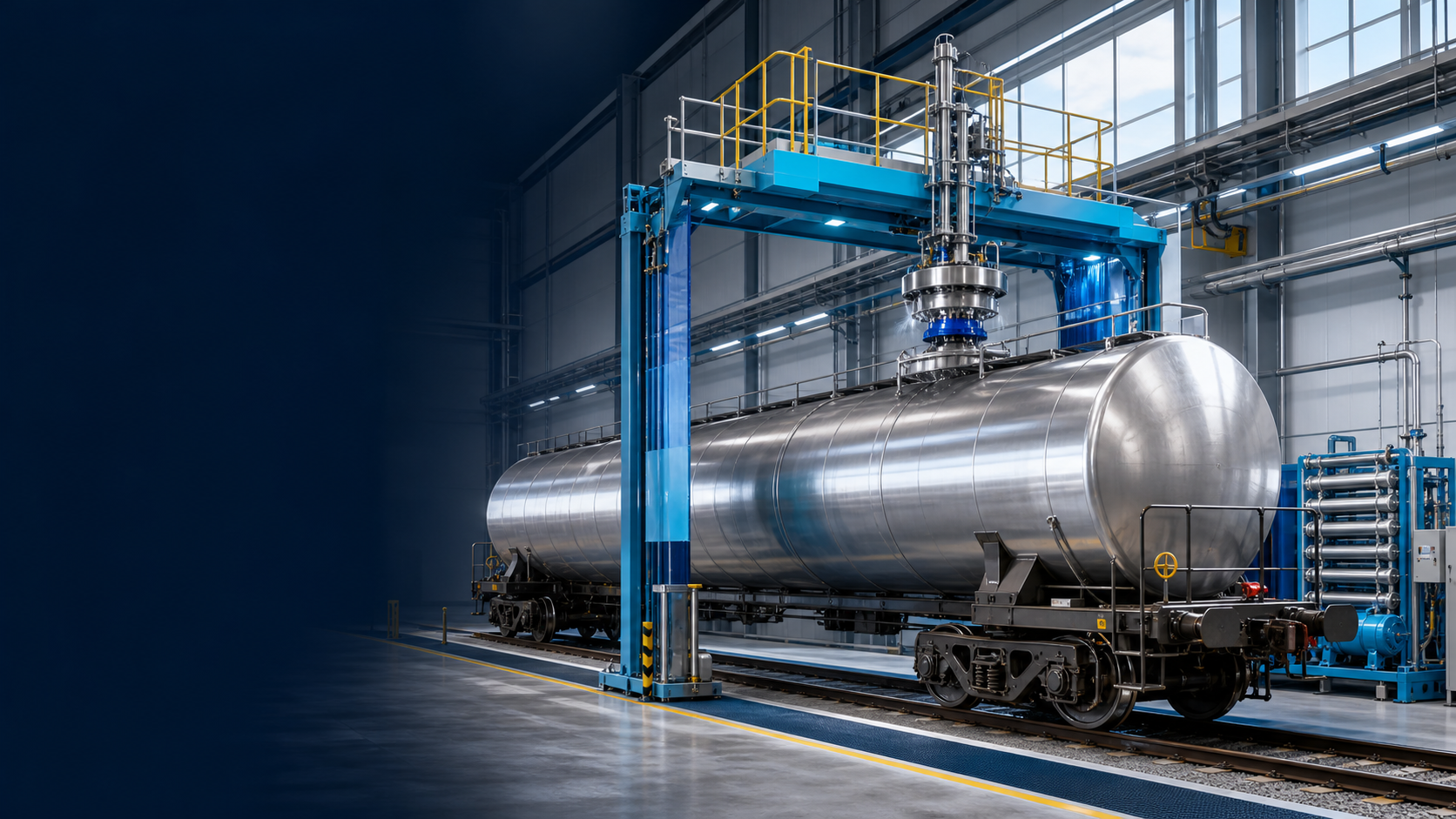
A configurable automated-cleaning scope for rail tank cars, combining tank access and positioning, 3D interior cleaning, drying, inspection and recovery interfaces.
Application scope
The supplied product material describes an automated process that can include steam conditioning, high-pressure cleaning, effluent collection, heated-air drying and image-assisted inspection.
Projects assessed around the tank car, residue, cargo-handling procedure and the relevant station safeguards.
System scope can include cleaning, effluent management and recovery interfaces for site-specific processes.
Cleaning steps can be aligned with the customer’s documented hygiene and verification procedure.
Layout and operating flow are reviewed with the access position, utilities, drainage and treatment interfaces.
Typical process sequence
This sequence is translated from the supplied Chinese product material. It is a planning reference; the final operational procedure must be approved for the site, cargo and applicable safety requirements.
Use the selected positioning method to establish the manway or access-point location.
Apply the selected steam-conditioning step under the station’s defined venting and safety procedure.
Use a rotating 3D cleaning head with the specified cleaning medium and programmed motion.
Collect cleaning liquid through the tank drain and direct it to the specified wastewater path.
Use the selected heated-air system and exhaust-handling path to complete drying.
Use the project-defined visual, sensor-based or manual inspection method before release.
System scope
Each module is assessed in relation to the full operating process, not as an isolated machine purchase.
Tank-access alignment, travel or lifting arrangement, flexible-arm movement, sealing and image-feedback options.
Rotary 3D cleaning head, high-pressure water connection, selected nozzle arrangement and process control.
Steam, water, compressed-air and heated-air drying interfaces selected for the final site design.
PLC controls, operator station, process monitoring and optional image feedback to support the defined workflow.
Effluent collection, pumping, wastewater-pre-treatment and exhaust-treatment interfaces as required by the project.
Platform, pipework, instrumentation, controls and project-specific protection measures defined with the site.
Design reference
The points below translate the functional scope in the supplied rail-tank-car material. They do not represent a universal specification, performance guarantee or commercial offer.
Rotating interior-cleaning head with a selected pressure and nozzle arrangement.
Optional image or scan-assisted support for access-point positioning and inspection.
Sequence configured around tank geometry, residue and selected operating steps.
Drying interface selected with the site utility and exhaust-treatment scope.
Collection and treatment path matched to the customer’s station process.
Visual, sensor-based or manual inspection method to be agreed for the application.
Project discussion
JAGUI can structure the initial conversation around the details that determine an appropriate system scope.